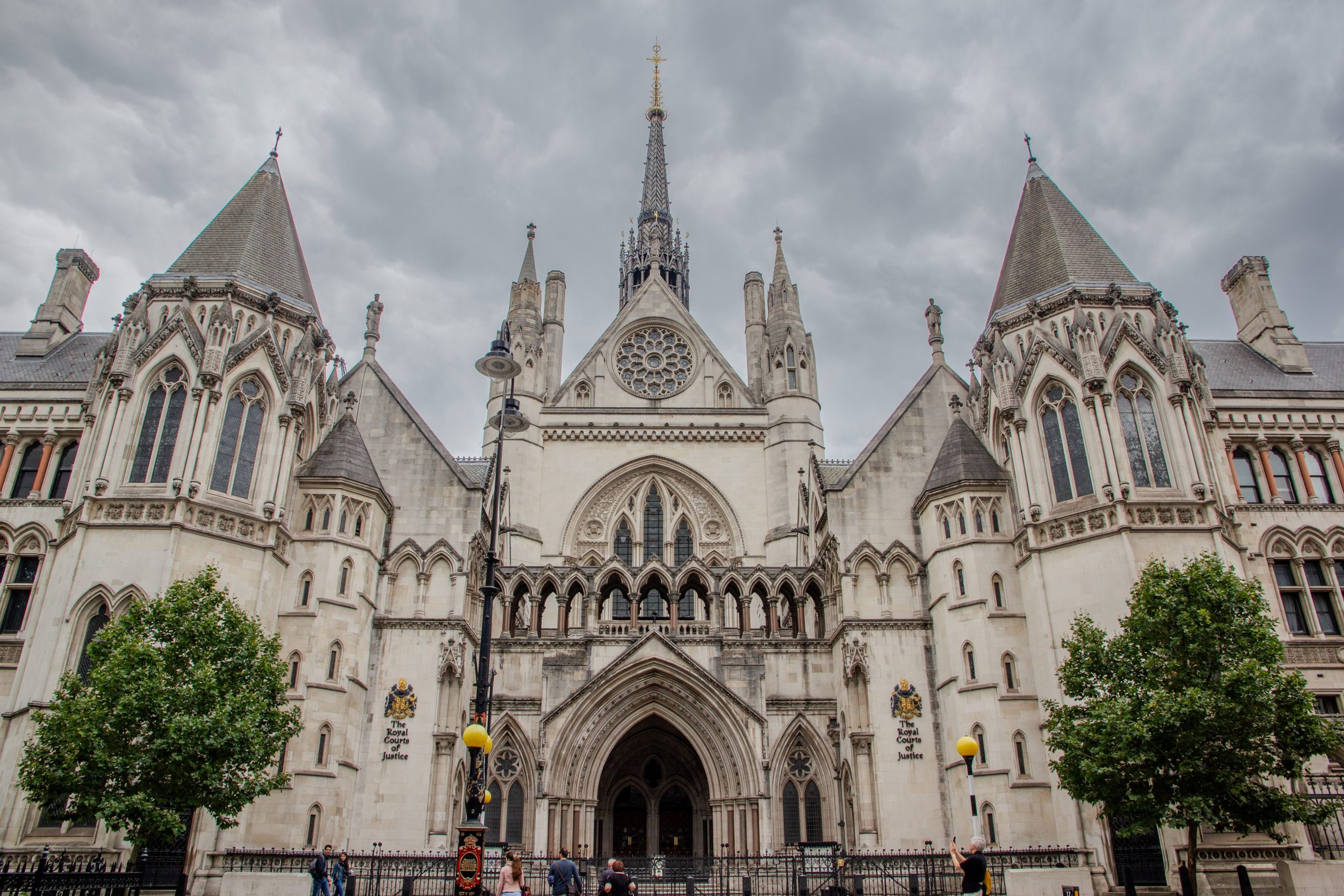
Legal services in the UK are not overseen by one single regulator. Regulation is layered instead: an Act of Parliament sets the framework, a group of professional bodies authorise and supervise lawyers and law firms, an oversight body holds those regulators to account, and a separate scheme handles complaints from consumers. How that looks in practice depends on where in the UK you are and what kind of legal work is involved.
The statute underneath the whole system
In England and Wales, the framework is set mainly by the Legal Services Act 2007. The Act created the Legal Services Board (LSB) as an independent oversight regulator, established the Office for Legal Complaints (which runs the Legal Ombudsman), and set out the objectives that regulators must pursue. The LSB took on most of its statutory powers on 1 January 2010.
The design is deliberately indirect. The LSB does not authorise individual lawyers or investigate individual cases. Instead, it oversees a set of “approved regulators” that do that day-to-day work, and it can hold them to account for how well they perform. According to the LSB’s 2024–25 annual report, it oversees nine approved regulators, which together are responsible for regulating over 197,000 lawyers practising in England and Wales.
What makes some legal work “reserved”
The Act draws a line between legal activities that anyone may carry out and a smaller list that only authorised (or specifically exempt) people are permitted to perform. Section 12 of the Legal Services Act 2007 identifies six reserved legal activities. Carrying one of them out without authorisation is generally a criminal offence under section 14 of the Act, subject to the exemptions set out in Schedule 3.
| Reserved legal activity | Broad description |
|---|---|
| Exercise of a right of audience | Appearing before a court and addressing it on a client’s behalf |
| Conduct of litigation | Issuing and running court proceedings for a client |
| Reserved instrument activities | Preparing certain instruments, including most conveyancing and some probate documents |
| Probate activities | Preparing papers for obtaining grants of probate or letters of administration |
| Notarial activities | Work reserved to notaries, such as certain certified documents |
| Administration of oaths | Administering oaths and taking affidavits or statutory declarations |
The distinction matters because “reserved” is narrower than “legal”. Much everyday legal work – general advice, many contract matters, drafting a straightforward will, or negotiating – is not reserved, and a person does not need to be authorised to provide it. Reserving an activity is about protecting the public where the consequences of poor work are considered most serious.

Who regulates whom: approved regulators and licensing authorities
Each reserved activity is overseen by one or more approved regulators. In several cases the approved regulator is a professional body, but the regulatory function is carried out by an independent arm. The Law Society, for example, is the approved regulator for solicitors, while the Solicitors Regulation Authority (SRA) is its independent regulatory body. Similarly, the General Council of the Bar is the approved regulator for barristers, with the Bar Standards Board (BSB) as its independent regulator.
A current list is maintained by the Legal Services Board’s approved regulators page, which also shows which bodies are licensing authorities – the bodies permitted to license alternative business structures (ABS) that provide reserved legal services.
| Regulator (England and Wales) | Main area |
|---|---|
| Solicitors Regulation Authority | Solicitors and the firms that employ them |
| Bar Standards Board | Barristers |
| CILEx Regulation | Chartered legal executives |
| Council for Licensed Conveyancers | Licensed conveyancers |
| Intellectual Property Regulation Board | Patent and trade mark attorneys |
| Costs Lawyer Standards Board | Costs lawyers |
| Faculty Office (Master of the Faculties) | Notaries |
Accountants’ bodies, including ICAEW, ICAS and ACCA, also appear as approved regulators for probate activities, though the LSB notes that some do not currently authorise anyone for that work. Together the SRA and BSB regulate more than 90% of regulated legal professionals in England and Wales, which is why their performance draws particular attention.
The objectives regulators are legally required to pursue
Regulation is not open-ended. Section 1 of the Legal Services Act 2007 sets out nine regulatory objectives that the LSB, the approved regulators and the Office for Legal Complaints must observe. They include protecting and promoting the public interest, supporting the rule of law, improving access to justice, protecting consumers’ interests, promoting competition, encouraging an independent and effective legal profession, increasing public understanding of legal rights and duties, and promoting adherence to professional principles. A ninth objective, concerning the prevention and detection of economic crime, was added by later legislation.
The Act does not rank these objectives, so regulators have to balance them case by case. That tension is a recurring theme in regulatory consultations: consumer protection can pull in one direction while promoting competition and access pulls in another.

How solicitors and firms are authorised and supervised
Authorisation is the practical layer. Taking the SRA as an example, individuals and firms must meet entry requirements and then comply with the SRA Standards and Regulations, which replaced the old SRA Handbook on 25 November 2019. Those standards include the Principles, separate Codes of Conduct for individuals and for firms, and the Accounts Rules that govern how client money is held.
The firm-level Code of Conduct adds business controls: appropriate supervision, a named compliance officer for legal practice and one for finance and administration in larger firms, and systems for identifying and managing risk. Firms are also required to hold professional indemnity insurance, and the SRA operates a Compensation Fund that may provide a remedy in defined circumstances, such as when a client suffers loss because of a solicitor’s dishonesty.
Supervision is risk-based rather than universal. Regulators generally gather information through annual returns, notifications of changes, thematic reviews and reports from the public, then focus closer attention on the firms that appear higher risk.

What regulation does not cover
It is a common assumption that every person offering legal help is regulated. That is not the case. Some services are outside the reserved list, and a provider may lawfully offer them without being an authorised person. Will writing is a frequent example: drafting a will is generally not a reserved activity, although probate activities and reserved instrument activities are. Likewise, offering general legal advice or negotiating on someone’s behalf may fall outside the reserved framework, depending on what exactly is involved.
Where a service is unreserved, consumer protection tends to rely more on general law – contract, negligence and consumer legislation – than on a specialist regulator. That is one reason regulators publish guidance to help the public check whether a provider is authorised before instructing them.
Service complaints and conduct concerns are handled differently
Two separate routes exist when something goes wrong, and they answer different questions.
The Legal Ombudsman deals with service complaints about legal service providers that are authorised by an approved regulator. A consumer normally has to complain to the provider first and allow it to respond; if the outcome is unsatisfactory, the complaint can be brought to the ombudsman. The scheme rules set out which complaints are eligible, the time limits for bringing one, and the remedies the ombudsman can require. Its service is free to the consumer.
Concerns about a lawyer’s conduct – for instance, alleged dishonesty or a serious breach of the rules – follow a different path and go to the relevant regulator, which has its own investigation and enforcement powers. In the most serious cases, matters can reach a disciplinary tribunal. Keeping the two routes distinct matters, because the ombudsman cannot discipline a lawyer and the regulator does not generally award compensation for poor service.
How the regulators themselves are held to account
Because the LSB oversees regulators rather than lawyers, it assesses how well each approved regulator performs. Its 2024–25 regulatory performance assessment, published in March 2025, rated both the SRA and the BSB as providing “insufficient assurance” against at least one standard, and the LSB stated that it had begun enforcement action in 2024 involving the direction-making process. Both regulators acknowledged the need for improvement, and the LSB has said it considers the necessary changes to be within their powers.
Transparency is part of that accountability. Regulators publish decisions, consultation outcomes and performance data, and the wider picture is followed in legal industry coverage as well as by practitioners and consumer bodies. For anyone trying to understand how the framework operates day to day, those published records are often the most direct evidence of how rules are applied.

Scotland and Northern Ireland run separate systems
The Legal Services Act 2007 applies to England and Wales, not to the whole of the UK. Scotland has its own arrangements: the Law Society of Scotland regulates solicitors, the Faculty of Advocates regulates advocates, and the Scottish Legal Complaints Commission handles complaints about the handling of legal services. The Regulation of Legal Services (Scotland) Act 2025 made further changes to that framework. Northern Ireland also has its own regulators and professional bodies, separate from the England and Wales structure.
For consumers, the practical implication is simple: check which system applies to the provider’s location and the type of work, because the route for a complaint can differ.
Frequently asked questions
Who regulates solicitors in England and Wales?
The Solicitors Regulation Authority (SRA) authorises and supervises solicitors and the firms they work in. The Law Society is the approved regulator under the Legal Services Act 2007, and the SRA is its independent regulatory body.
What are the six reserved legal activities?
They are the exercise of a right of audience, the conduct of litigation, reserved instrument activities, probate activities, notarial activities, and the administration of oaths, as listed in section 12 of the Legal Services Act 2007.
Do I always need a regulated lawyer to write a will?
Not necessarily. Drafting a will is generally not a reserved activity, so it can, depending on the circumstances, be done by someone who is not an authorised person. Probate activities, by contrast, are reserved, so where a matter moves into that territory, authorisation generally applies.
What is the difference between the Legal Ombudsman and a regulator?
The Legal Ombudsman handles service complaints about authorised legal providers and can require remedies such as an apology or, in some cases, a financial award. A regulator such as the SRA handles conduct and compliance issues and can take disciplinary or regulatory action. The two serve different purposes.
Does the same regulatory system apply across the whole UK?
No. The Legal Services Act 2007 framework covers England and Wales. Scotland and Northern Ireland each operate their own arrangements, with different regulators and complaints bodies.
The practical picture
UK legal services regulation is best understood as an allocation of responsibility rather than a single gatekeeper. Parliament sets the rules and the regulatory objectives; approved regulators authorise, supervise and, where necessary, discipline; licensing authorities extend that oversight to alternative business structures; the Legal Ombudsman resolves service complaints; and the Legal Services Board supervises the supervisors. Which part of that structure applies to a given situation depends on the activity, the jurisdiction, and whether the issue is about the quality of a service or a lawyer’s conduct.